
Art-Based
Support Work
NDIS Support Work
Are you looking to learn a new artistic skill, experiment with mediums or book dedicated time to work on your passions with a trained artist?
If you’re seeking an artsy supportive environment, visit our contact form
If you’re seeking mental health support, learn more about our art therapy services
-
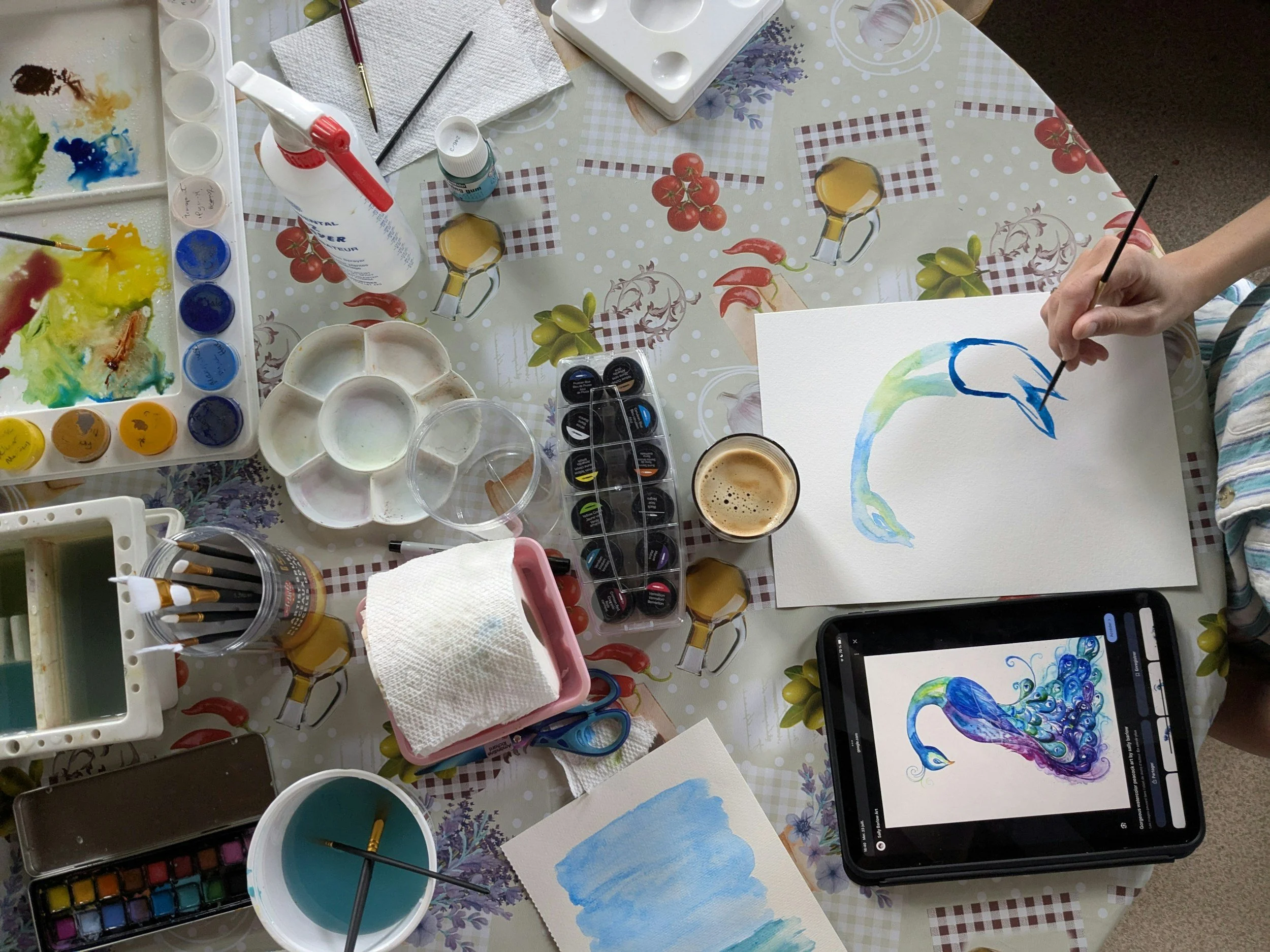
Visiting an office full of art supplies with a highly trained and supportive professional. You will be invited to work in the way that suits you best, the facilitator may offer ideas if that feels helpful for you.
All basic materials are supplied, welcome to bring your own if you have a unique project or interest. -
Sessions are provided on a one-to-one basis. However, if you have an established group please let us know and we may be able to host you!
Your regular support workers are welcome to attend with you if prefered or required. We also have waiting areas for your supports if you require assistance with travel to and from. -
Any NDIS Participants who are Plan or Self-Managed that have Social & Community Participation funding.
We do not provide any travel services to and from office sessions or manual handling. We do provide fine motor assistance with artmaking if appropriate.
Your transport supports are welcome to attend sessions or use our waiting area.
What’s the difference between art-based support and art therapy?
“Art-based support” is when a support worker facilitates artmaking with a participant. It is not a type of therapy and only includes skills and social goals.
Art-based support goals:
Skills building through recreational art activities
Building confidence, communication and routine through
art activities
General support/assistance (fine motor), no manual handling
Documentation:
Support workers provide shift notes, these contain basic information on your session attendance
Support workers do not use standardised measures to perform assessments or track progress
Support workers cannot provide Progress Reports for funding review
“Art therapy” is a type of counselling provided by a mental health professional. Art is used as another way to communicate, just like words. Art therapy supports a participant’s mental health journey with capacity building goals. For more information on our art therapy services, click here
Art therapy goals:
Increase self-esteem, self-awareness, self-management
Increase ability to share and process difficult emotions
Increase creative problem solving skills
Increase tolerance, adaptability and flexibility
Documentation:
Art therapists write detailed case notes and track progress
Art therapists use standardised assessment and progress tools
Art therapist can provide Progress Reports for funding review